Home › Road Signs › Stop Sign
Stop Sign
What you need to know
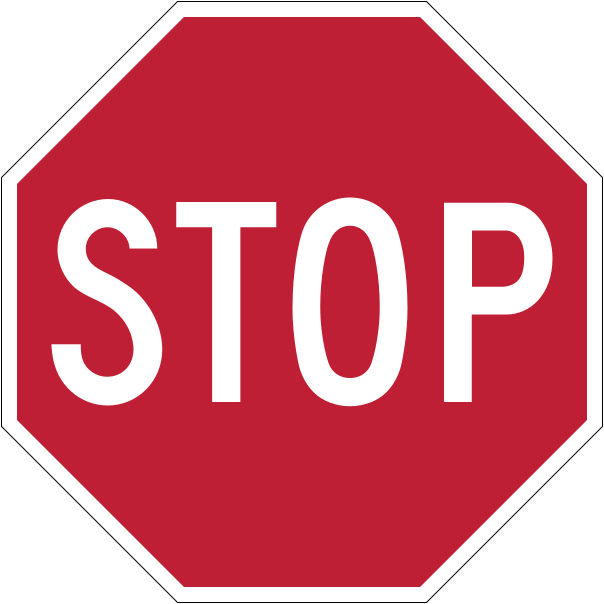
A red octagonal stop sign means you must come to a complete stop at the marked stop line or before the crosswalk, and yield to traffic and pedestrians. In the official Ontario tests, questions on this topic come from the Ministry of Transportation's Driver's Handbook (for cars) and Motorcycle Handbook (for riders).
Sample practice questions
What must you do when you come to a STOP sign?
- Slow down, then proceed if the way is clear
- Come to a complete stop at the stop line or crosswalk
- Stop only if there is cross traffic approaching
- Stop, then continue without checking for pedestrians
💡 At a stop sign you must make a full stop at the stop line or before the crosswalk or intersection edge, and yield to all traffic and pedestrians.
If there is no stop line and no crosswalk at a stop sign, where must you stop?
- At the edge of the sidewalk, or if there is no sidewalk, at the edge of the intersection
- Two metres before the intersection to improve your view
- Beside the stop sign itself
- Wherever the traffic ahead has stopped
💡 The handbook says: stop at the stop line if marked; otherwise at the crosswalk; otherwise at the edge of the sidewalk; otherwise at the edge of the intersection.
Frequently asked questions
- What must you do when you come to a STOP sign?
- Come to a complete stop at the stop line or crosswalk At a stop sign you must make a full stop at the stop line or before the crosswalk or intersection edge, and yield to all traffic and pedestrians.
- If there is no stop line and no crosswalk at a stop sign, where must you stop?
- At the edge of the sidewalk, or if there is no sidewalk, at the edge of the intersection The handbook says: stop at the stop line if marked; otherwise at the crosswalk; otherwise at the edge of the sidewalk; otherwise at the edge of the intersection.
More questions on Stop Sign and every other topic live in the G1 practice test and M1 practice test.